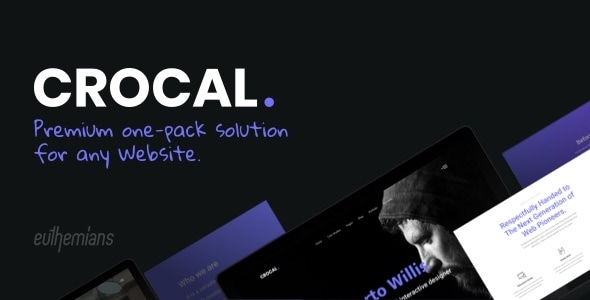
Crocal Corporate is a multi-purpose WordPress theme sold on ThemeForest by the developer Euthemians, priced at $59. It targets businesses and freelancers who want a corporate or agency website built without writing code, and it ships with the WPBakery page builder, a custom grid system, WooCommerce support and a set of importable demo sites. Buyers who need a professional site up quickly, or agencies producing several client builds from one licence, are the core audience.
The listing has attracted 2,008 sales and holds a 4.97 out of 5 rating across 62 reviews, which is a strong signal for a theme in this price bracket. The vendor last pushed an update in June 2026, so the product is still being maintained. That combination of a high rating and recent activity matters more than any single feature when judging whether a theme will still work two years from now.
What Crocal actually does well
The theme is built around WPBakery Page Builder, a drag-and-drop editor that lets a site owner assemble layouts visually instead of writing shortcodes by hand. Crocal extends the builder with its own row and column controls, which is where most of the practical value sits. Those controls include equal-height columns, vertical alignment, full-width and screen-width content, parallax backgrounds and the ability to reorder columns at different screen sizes. In practice this means a three-column feature row on desktop can stack into a single column on mobile without custom CSS.
Responsive behaviour is handled per element rather than globally. Typography sizes, spacing and effect settings can be defined separately for each breakpoint, so a heading that reads well on a laptop can be scaled down deliberately for phones. That level of control is unusual at this price and is the main reason the theme suits agencies building varied client sites.
Import on Demand is the setup mechanism. Rather than importing an entire demo site and deleting what is not needed, a user can pull in individual pages, portfolio items, posts or product templates. For anyone who has spent an afternoon stripping demo content out of a theme, this is a meaningful time saver, and it also lets a builder study how a specific element was constructed before rebuilding it.
Performance features are handled at the platform level. The theme uses WordPress native image handling, which means the CMS generates multiple sizes of each upload and the browser picks the appropriate one through the srcset attribute. Lazy loading can be switched on from the admin panel so images below the fold are only fetched when scrolled into view. Neither is unique to Crocal, but both are implemented the way WordPress intends, which reduces the risk of conflicts with caching and optimisation plugins.
On the compliance side, Crocal includes cookie consent controls. The administrator decides which external services — Google Maps, analytics, embedded video — load on first visit, and visitors get a preferences modal to override those defaults. For projects with European traffic, that is a genuine requirement rather than a nice-to-have.
Compatibility is broad. The theme supports WooCommerce for shops, bbPress for forums, The Events Calendar in both free and pro versions, Gravity Forms, and WPML for multilingual sites. It is also Gutenberg-optimised, so the block editor remains usable alongside the page builder rather than being locked out.
Where Crocal fits and where it does not
The strongest fit is a small or mid-sized business site: a services company, a consultancy, a professional practice or a studio that needs a homepage, service pages, a team section, a blog and a contact form. The pre-built demos cover those patterns, and the import system means a working draft can exist within an hour of installation.
Agencies are a second clear fit. The per-element responsive controls and the grid system support bespoke layouts without touching theme files, and the broad plugin compatibility means client requests for a shop, a forum or an events calendar can be absorbed without switching themes.
Freelancers building a single portfolio or a personal brand site will find the feature set larger than required, but the price is low enough that the extra capability costs little. The same applies to a content-led blog that wants a corporate aesthetic.
Crocal is the wrong choice for a project that needs a fully block-based, site-editor-driven build. WPBakery stores layouts as shortcodes inside post content, which means the design is tied to the plugin. If a site owner later wants to move to native Gutenberg blocks or a different builder, the content does not travel cleanly. Anyone committed to the WordPress site editor as a long-term direction should look at a block theme instead.
It is also a poor fit for very large content operations. There is no mention of a dedicated mega menu builder, advanced custom fields integration or a structured content model beyond standard posts and pages, so a publisher managing thousands of entries with complex taxonomies will likely outgrow it.
Strengths and limitations
Strengths
- Per-breakpoint control over typography, spacing, column order and effects, which supports genuinely different mobile layouts rather than a scaled-down desktop view.
- Import on Demand allows selective import of pages, posts, portfolios or products instead of a full demo dump.
- Broad plugin compatibility covering WooCommerce, bbPress, The Events Calendar, Gravity Forms and WPML.
- Cookie consent tooling built in, with administrator-set defaults and a visitor preference modal.
- Gutenberg remains available alongside the page builder rather than being disabled.
- Consistent update history, with the most recent release recorded in June 2026.
- Well documented, per the vendor’s own listing, and shipped with PHP, CSS and JavaScript files.
Limitations
- Layouts depend on WPBakery. Content built with the builder is stored as shortcodes, so migrating away from the plugin later is not straightforward.
- The vendor does not publish performance benchmarks or Core Web Vitals figures, so page speed has to be assessed on a real build rather than taken on trust.
- Compatibility is stated for Internet Explorer 11, a browser that no longer receives security updates. That legacy support adds code weight that modern projects do not need.
- No dedicated mega menu or advanced custom fields integration is listed, which limits complex navigation and structured content needs.
- The theme is a general-purpose product, so a niche site — a restaurant, a hotel, a medical practice — will need more manual configuration than a purpose-built theme would require.
- Support terms, licence scope and refund policy are set by the marketplace rather than the developer and are not detailed in the product listing.
How it compares with other multi-purpose corporate themes
The multi-purpose corporate theme category is crowded, and most entries now offer a page builder, demo imports, WooCommerce support and a responsive grid. What separates them is depth of control and long-term maintenance.
On control, Crocal sits above the average. The per-breakpoint settings and the row and column options go further than the basic builder defaults most themes expose, which is the difference between a layout that merely fits a phone screen and one designed for it.
On maintenance, the picture is reasonable but not exceptional. The theme supports WordPress versions from 5.0 through 6.9, which is a wide compatibility window, and the update record shows continued work. Buyers should still check the changelog at the point of purchase, since that is the only reliable indicator of whether a theme is actively developed.
On approach, Crocal is a classic builder-based theme rather than a block theme. That is a deliberate trade-off: more granular visual control now, less portability later. Alternatives built on the WordPress site editor offer cleaner content migration but typically less fine-grained responsive control out of the box. Neither approach is universally better; the right choice depends on how long the site is expected to live and who will maintain it.
On price, $59 is standard for a premium ThemeForest theme. Value depends on whether the grid system and import tools save enough build time to justify it, which for an agency working on multiple sites is usually a straightforward calculation.
Frequently Asked Questions
Does Crocal require coding knowledge to build a website?
No. The theme is designed around the WPBakery visual builder, so pages are assembled by dragging elements onto a layout rather than writing code. Pre-built demo content can be imported selectively and then edited. Custom CSS is possible but optional, and the per-breakpoint settings cover most responsive adjustments without it.
Is Crocal compatible with WooCommerce for building an online shop?
Yes. The vendor lists compatibility with WooCommerce versions 6.x, 7.x and 8.x. Product templates can be imported individually through the Import on Demand feature, so a shop can be set up without importing an entire demo site. Payment gateways and shipping rules are handled by WooCommerce itself, not by the theme.
Can Crocal be used for a multilingual website?
Yes, the theme lists WPML compatibility, which is the most widely used translation plugin for WordPress. That allows a site to serve content in multiple languages with translated pages, menus and custom post types. Translation setup and the cost of WPML itself are separate from the theme purchase.
What happens to the design if the WPBakery plugin is removed later?
The layouts stop rendering correctly. WPBakery stores page structure as shortcodes inside the content, so removing the plugin leaves that code visible as plain text. Migrating to native Gutenberg blocks or another builder requires rebuilding pages manually. This is a structural characteristic of builder-based themes, not a defect specific to Crocal.
Verdict
Crocal is a solid purchase for a business, agency or freelancer who wants a corporate WordPress site with fine-grained responsive control and does not mind working inside WPBakery. The import tools, the grid system and the broad plugin compatibility make it efficient for producing multiple client builds from one theme, and the sales count and 4.97 rating suggest buyers have been satisfied with that trade-off.
It is not the right choice for anyone committed to the WordPress block editor as a long-term platform, for publishers with complex content structures, or for projects where content portability between themes matters more than visual control. Those buyers should look at a block theme instead.
For everyone else, the decision comes down to one question: is the site going to be maintained with a page builder for its lifetime? If the answer is yes, Crocal is a well-supported option at a standard price. If the answer is uncertain, the shortcode dependency is worth weighing carefully before purchase.